
Shepherd Controls provides intelligent wastewater lift station automation designed to enhance system reliability, efficiency, and uptime. Powered by Mitsubishi Electric technology, our solutions help municipalities and utilities reduce unplanned maintenance, extend pump life, and optimize energy use across every stage of operation. With IoT-enabled controls, real-time diagnostics, and flexible automation platforms, Shepherd Controls helps modernize lift station infrastructure to meet the evolving demands of today’s wastewater systems.
Lift Stations
Why Wastewater Lift Stations Need Smarter Solutions
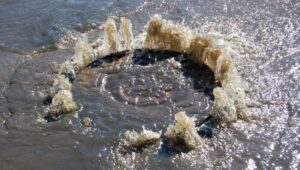
Sanitary sewer overflows (SSOs) and unexpected pump failures can lead to expensive downtime, maintenance costs, and environmental hazards. Mitsubishi Electric wastewater lift station automation helps prevent these issues through advanced anti-clogging functions, reliable startup support, and responsive technical service. By reducing blockages and minimizing manual intervention, operators can maintain consistent flow, improve system reliability, and extend the lifespan of critical pumping equipment.
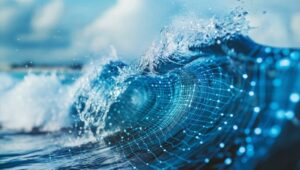
Accurate, real-time data is critical for maintaining wastewater system efficiency and regulatory compliance. Mitsubishi Electric wastewater lift station automation integrates seamlessly with SCADA systems to centralize monitoring and reporting. IoT-enabled sensors deliver continuous pump diagnostics, performance alerts, and predictive maintenance insights, giving operators the visibility needed to optimize operations, prevent costly failures, and reduce overall lifecycle costs.
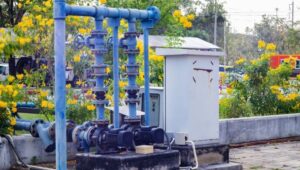
Aging pumps and outdated sensors can lead to unexpected equipment failures and costly downtime. Mitsubishi Electric wastewater lift station automation makes modernization simple, offering seamless integration for retrofits, control upgrades, and existing system networks. Facilities can enhance reliability, extend the life of critical components, and maintain regulatory compliance—all without major operational disruption.

Wastewater lift stations are some of the most energy-demanding components in municipal infrastructure. Mitsubishi Electric automation technology optimizes pump performance through precise acceleration control, reduced standby power, and minimized downtime. The result is lower energy consumption, improved system efficiency, and stronger alignment with sustainability and regulatory objectives.
Update Your Lift Stations Before They Fail
System Optimization
- Optimize pump acceleration and reduce standby power consumption
- Enable real-time system monitoring, alerts, and detailed reporting
- Visualize system capacity, performance trends, and operational efficiency

Modernization
- Integrated VFD, PLC/HMI, and SCADA solutions for seamless system control
- Control system upgrades, programming, and startup support
- Extended equipment and component lifespan through optimized performance
Your Roadmap to Smarter Lift Station Operations
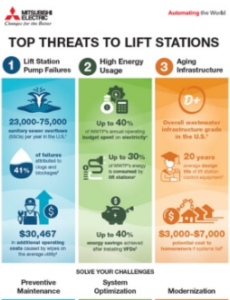
Download the infographic to learn about the most common wastewater lift station challenges and explore proven solutions such as clog prevention, real-time system monitoring, and smart modernization strategies.
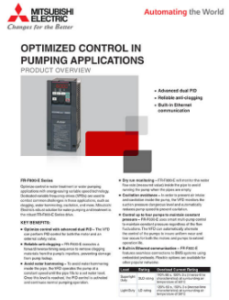
Boost efficiency and reliability in water treatment and pumping systems with Mitsubishi Electric’s FR-F800-E Series variable frequency drives (VFDs). Engineered for energy savings and precise control, these VFDs help prevent issues like pump clogging, water hammer, and cavitation. The result is smoother operation, reduced maintenance, and long-term protection for critical equipment.
Your Wastewater Lift Station Challenges, Solved
What are the main causes of wastewater lift station failures?
Most wastewater lift station failures stem from pump clogging, outdated equipment, and limited system monitoring. Mitsubishi Electric lift station automation helps prevent these issues with advanced anti-clogging technology, predictive diagnostics, and retrofit-compatible designs that extend pump life and reduce maintenance downtime.
How does automation improve wastewater lift station performance?
Automation enhances lift station performance through real-time pump monitoring, data diagnostics, and automated reporting. With centralized SCADA integration and IoT-enabled sensors, operators gain full system visibility to detect issues early, optimize energy consumption, minimize downtime, and maintain regulatory compliance.
Why is it important for municipalities to modernize their wastewater lift stations?
Upgrading wastewater lift stations helps municipalities reduce energy consumption, increase system reliability, and extend the lifespan of pumps and controls. Mitsubishi Electric automation solutions make modernization straightforward with retrofit-compatible VFDs, PLC/HMI, and SCADA systems that integrate easily with existing infrastructure for minimal downtime.
How do variable frequency drives (VFDs) improve wastewater lift station performance?
VFDs regulate pump speed to match system demand, reducing power consumption and mechanical stress. By minimizing problems like water hammer and cavitation, they enhance energy efficiency, protect critical components from premature wear, and extend overall equipment life.
Can Shepherd Controls support both new installations and system upgrades?
Yes. As an authorized Mitsubishi Electric distributor, Shepherd Controls provides complete support for both new wastewater lift station installations and modernization projects. From system design and programming to startup assistance and ongoing technical support, Shepherd Controls helps ensure reliable, long-term performance for municipal and utility applications.
©2025 Shepherd Controls. All rights reserved. | Privacy Policy | Purchase Terms & Conditions | Terms & Conditions